机场:谁修的,为谁修Airfields: who built them, and for whom飛行場:誰が、誰のために造ったか
同样是中国人用双手修机场:在占领区,是被日军强征的劳工为日本空军修;在四川,是几十万民工为中美空军修B-29基地。Chinese hands built airfields on both sides: in occupied China, labourers forced by the Japanese army built them for Japan’s air force; in Sichuan, hundreds of thousands of workers built B-29 bases for the Chinese and American air forces.どちらも中国人の手で造られた飛行場である。占領地では日本軍に徴用された労働者が日本空軍のために、四川では数十万の民工が中米空軍のB-29基地を造った。
为盟军For the Allies連合国のため四川:川西四大机场(1943—1944)Sichuan: the four B-29 bases west of Chengdu (1943–44)四川:川西の四大飛行場(1943—44)
- 新津、广汉、彭山、邛崃四个B-29基地和五个护卫战斗机场,由数万中国民工用手工工具修成。The four B-29 bases at Xinjin, Guanghan, Pengshan and Qionglai, with five fighter strips to defend them, were built by tens of thousands of Chinese labourers with hand tools.新津・広漢・彭山・邛崍の4つのB-29基地と護衛戦闘機用の5飛行場は、数万の中国人労働者が手作業の道具で造った。 ↗
- 美军官方战史(Romanus & Sunderland, 1956)记为征调农民30万人、合同工7.5万人;另有估计高达50万人。The US Army official history (Romanus & Sunderland, 1956) counts 300,000 conscripted peasants and 75,000 contract workers; some estimates run as high as 500,000.米陸軍公刊戦史は徴用農民30万人・契約労働者7.5万人とし、50万人とする推計もある。 ↗
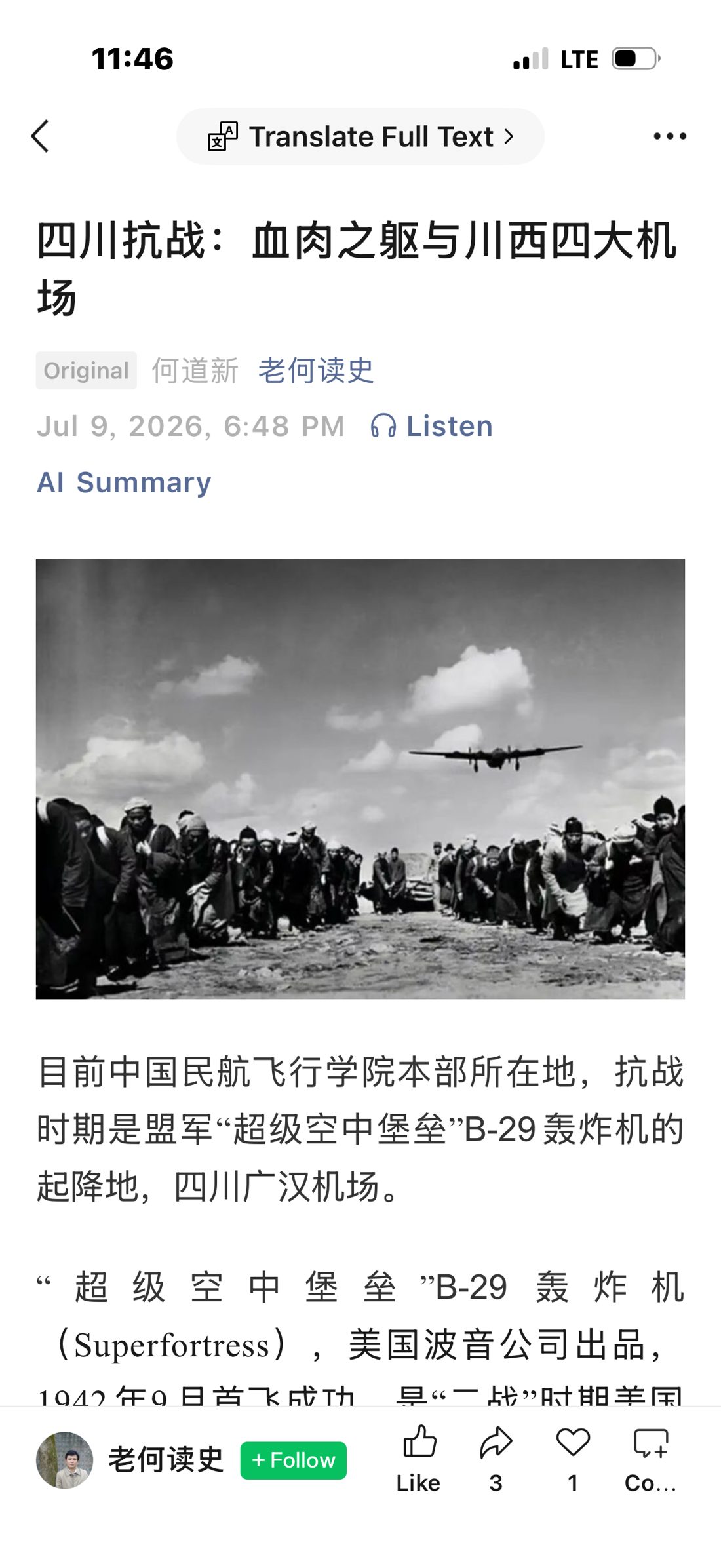
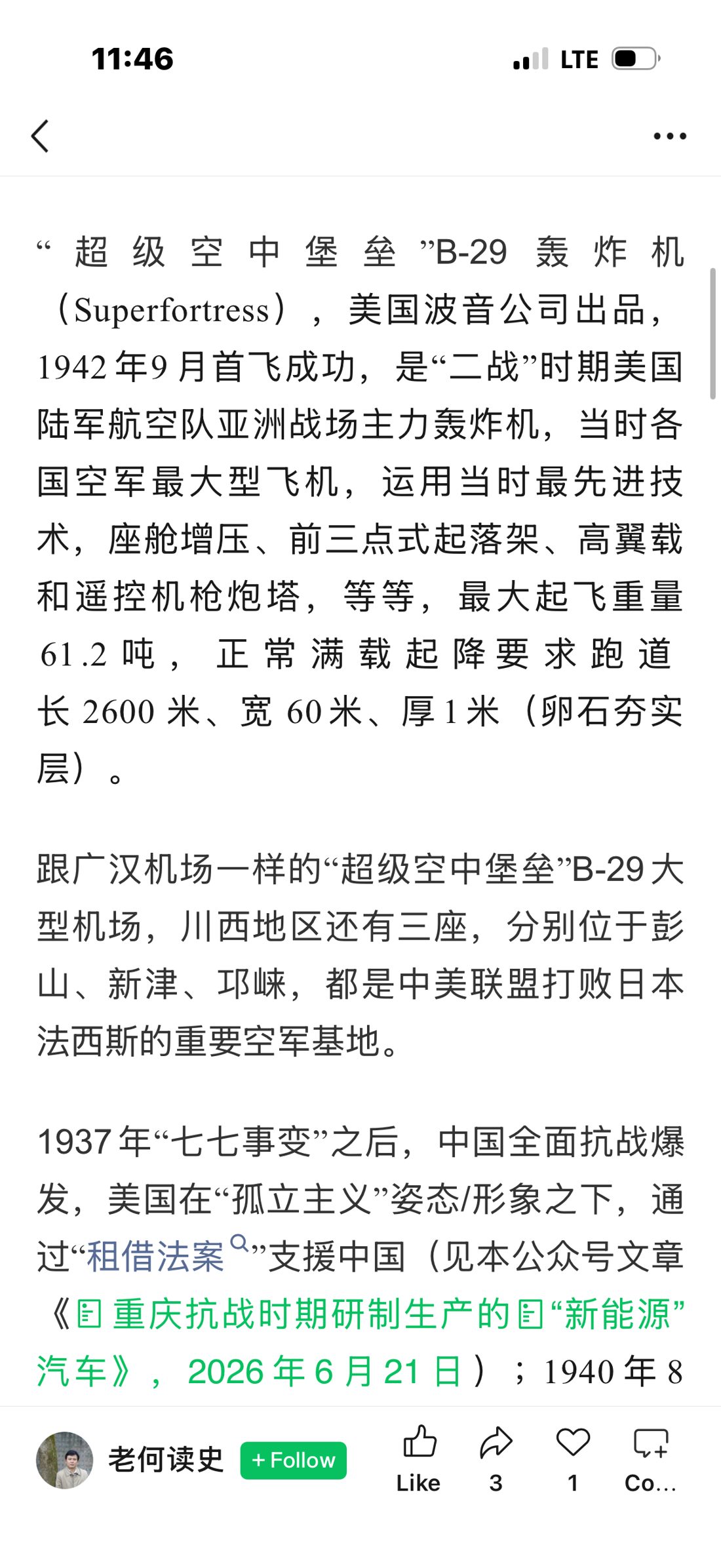
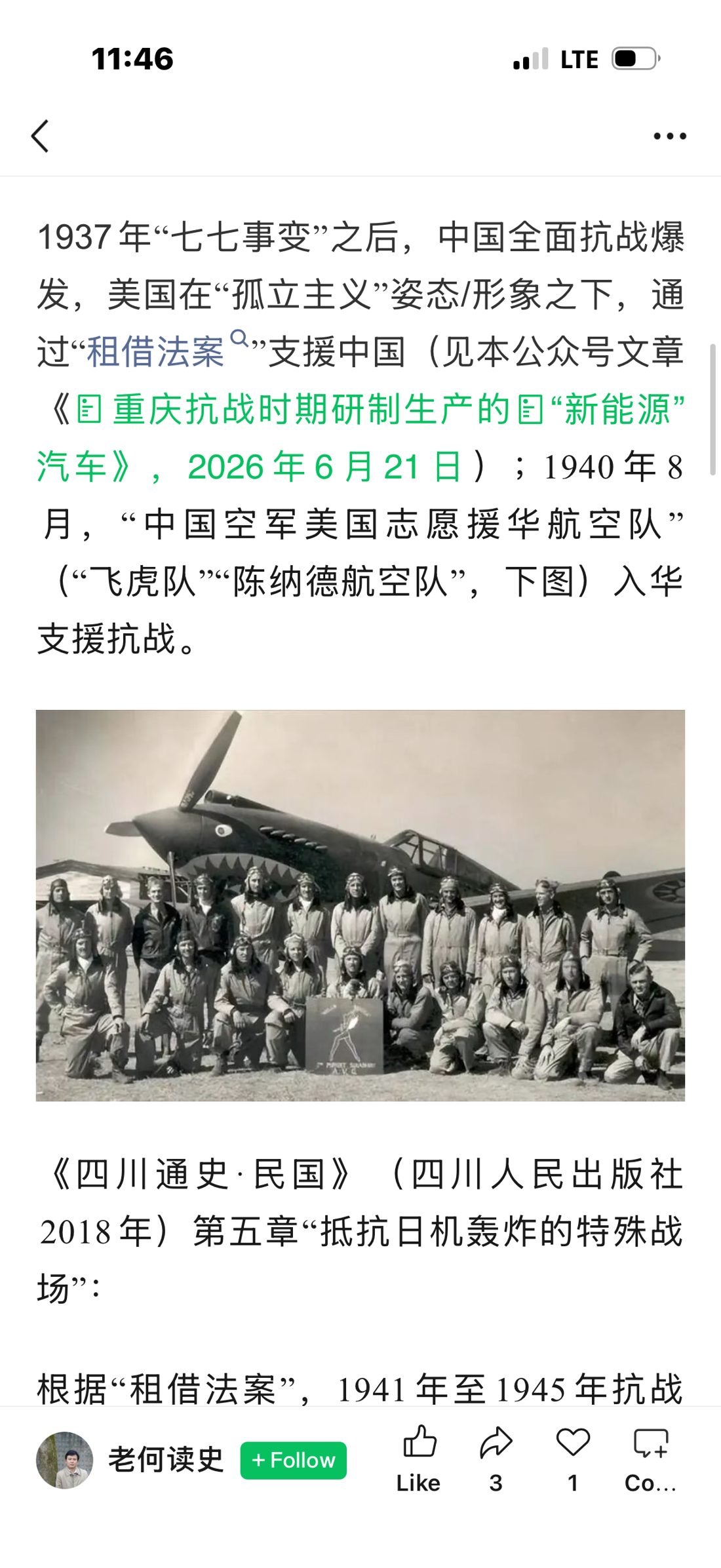
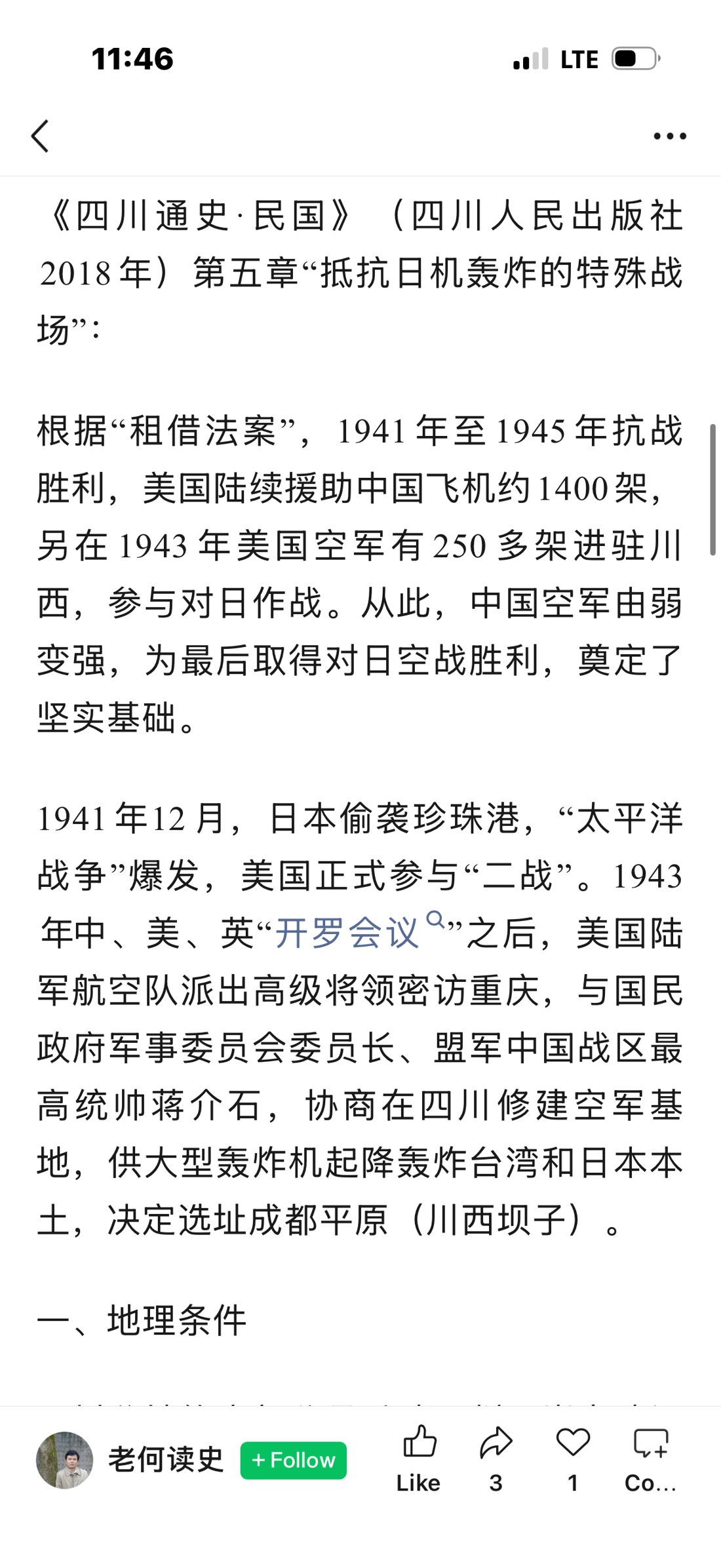
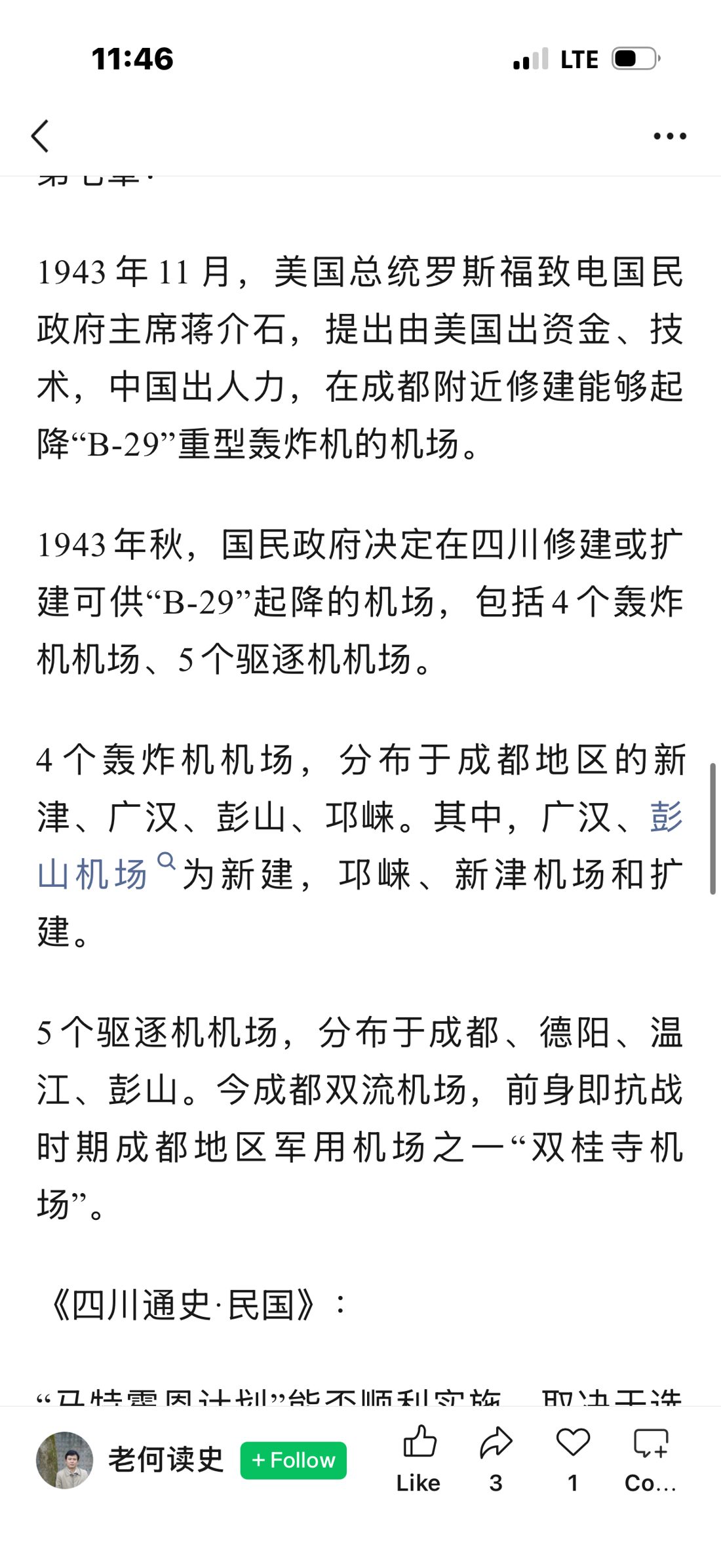
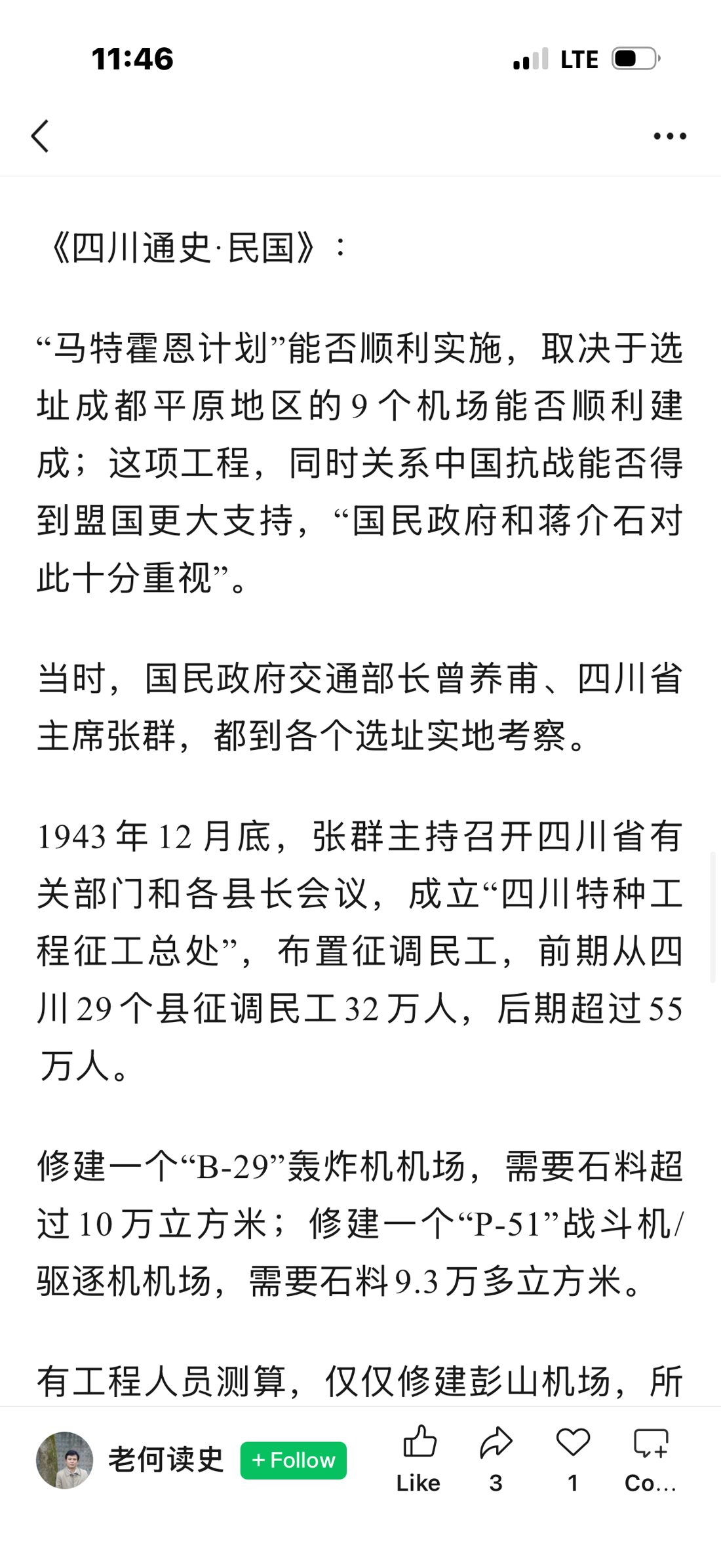
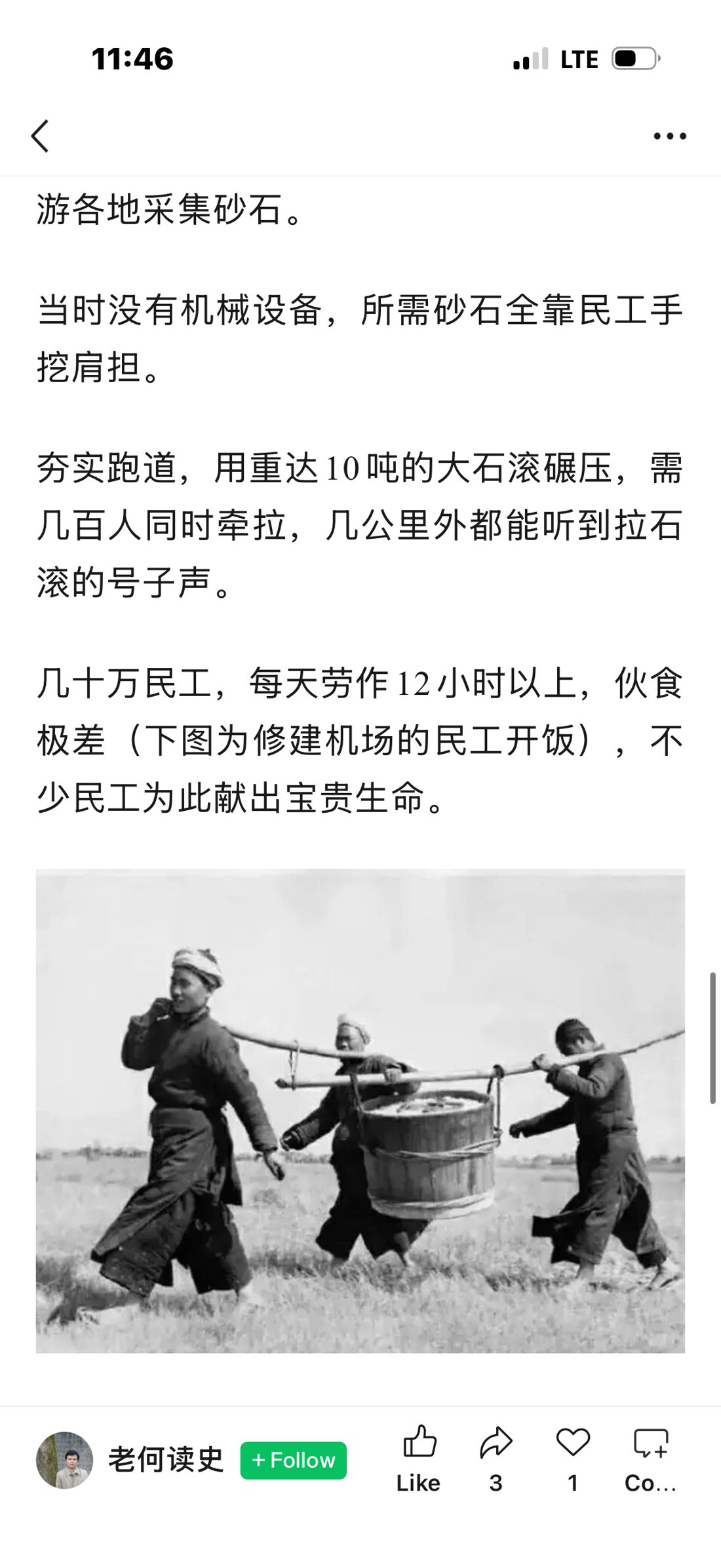
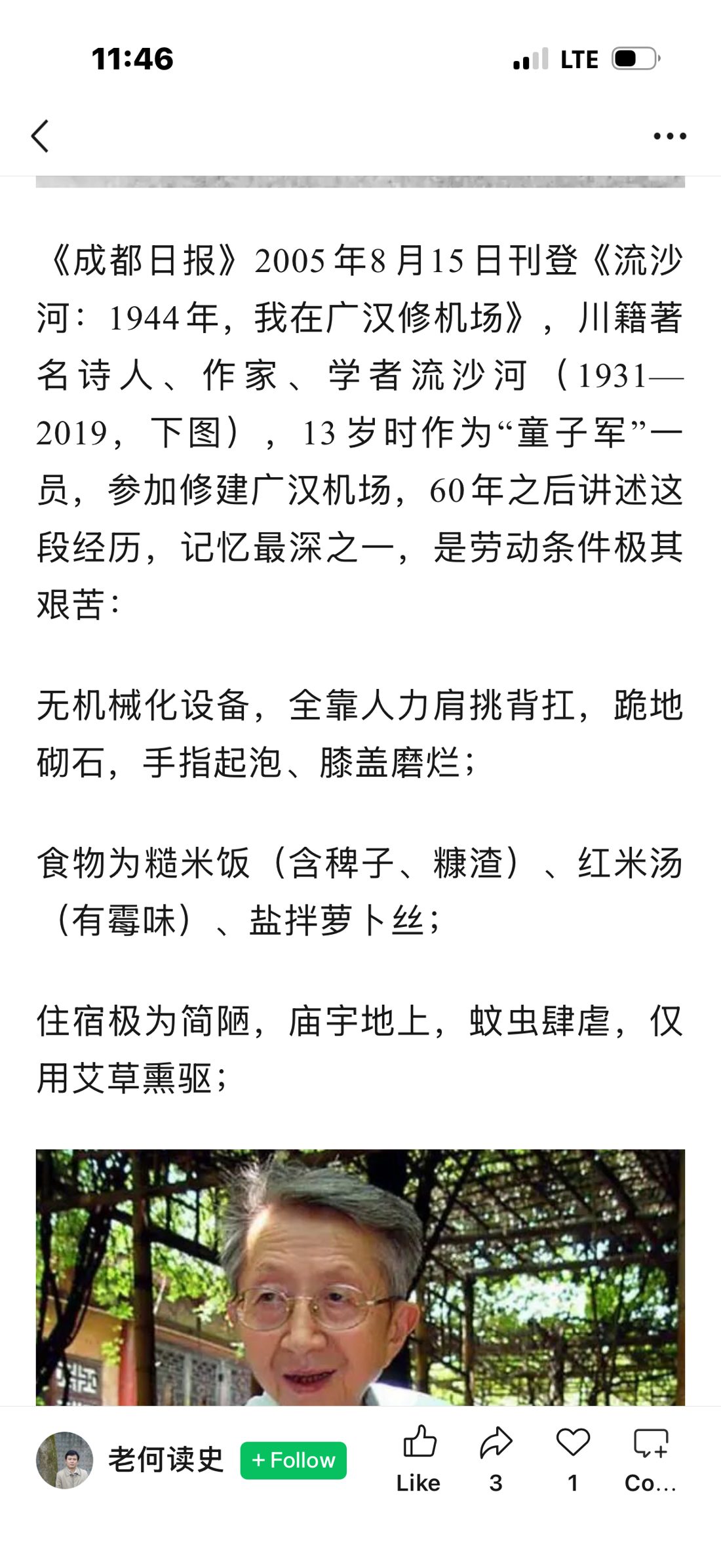
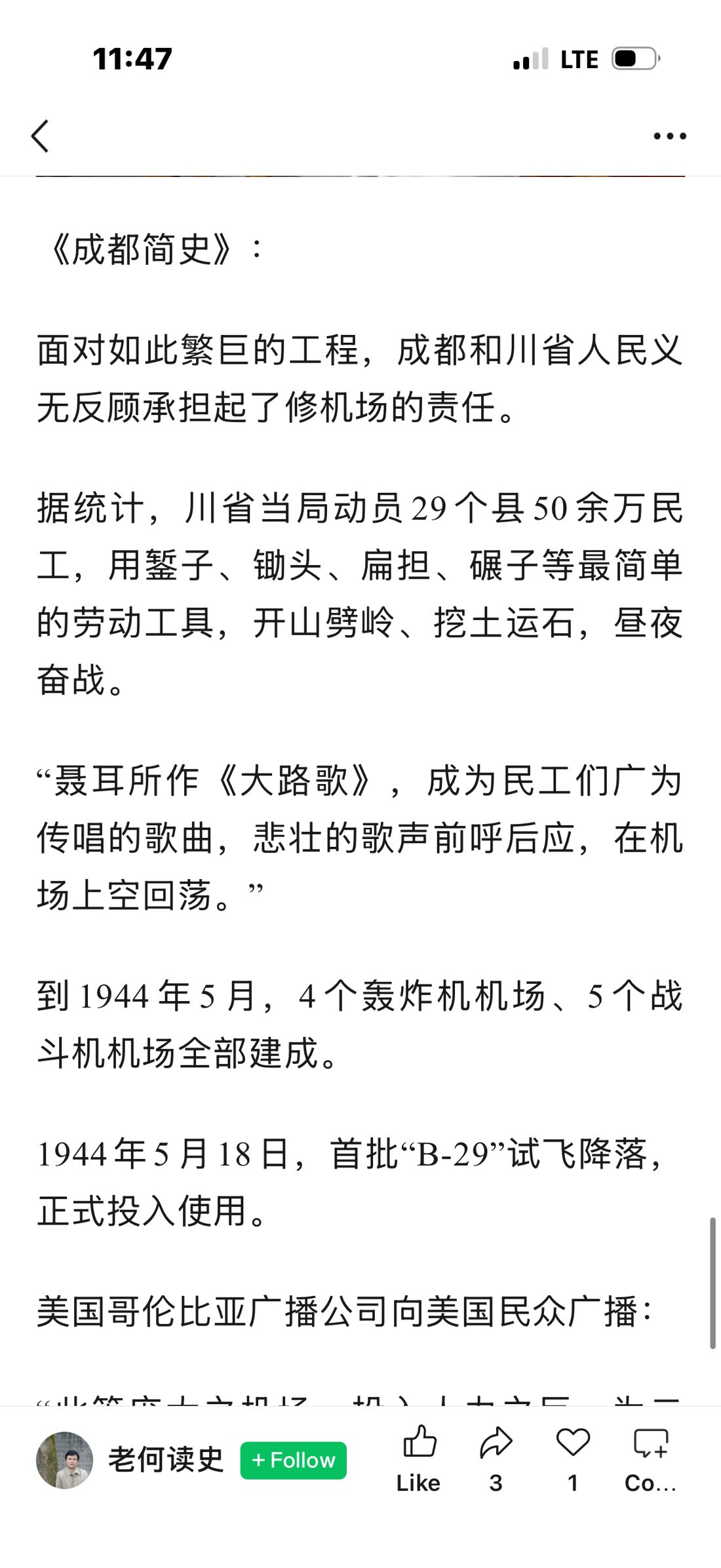
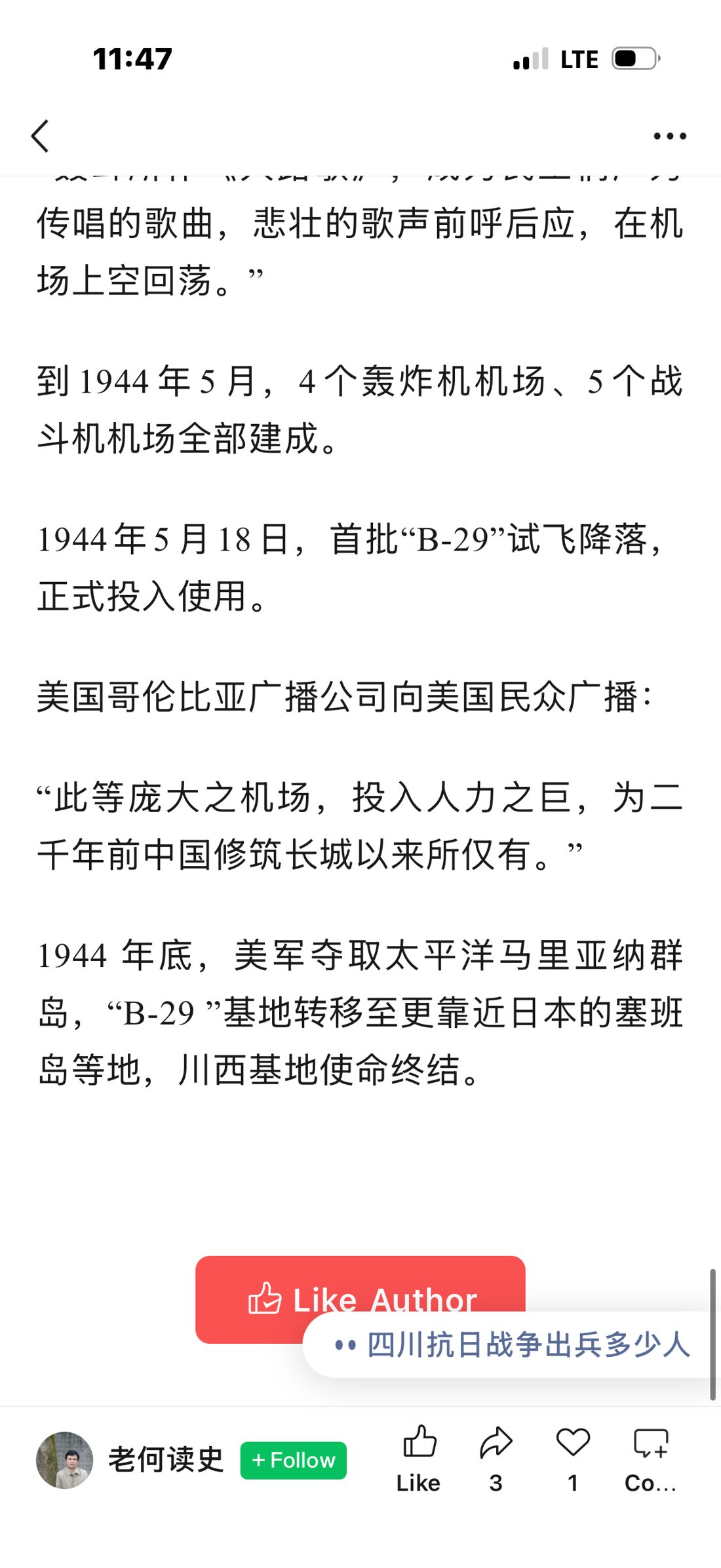
截图出处:公众号“老何读史”(何道新),《四川抗战:血肉之躯与川西四大机场》,2026年7月9日;文中引《四川通史·民国》(四川人民出版社,2018)。Screenshots: WeChat account 老何读史 (He Daoxin), “Sichuan at war: flesh and blood and the four great airfields of western Sichuan”, 9 July 2026, quoting the Sichuan General History, Republic volume (2018).出典:公衆号「老何読史」(何道新)、2026年7月9日。『四川通史・民国』(2018)を引用。
为日军For Japan日本軍のため深圳:日军在南山、福田修的三座机场(1938—1945)Shenzhen: three Japanese airfields in Nanshan and Futian (1938–45)深圳:南山・福田の日本軍飛行場3か所(1938—45)
文章称由4000多名深圳劳工修建,其中大多数人没能回家;最大的后海机场在今南山商业文化中心区。数字待核。The article says more than 4,000 Shenzhen labourers built them and most never came home; the largest, Houhai airfield, lay under today’s Nanshan business district. Figures still to check.記事によれば深圳の労働者4000人余りが建設し、大半は帰らなかった。最大の後海飛行場は現在の南山商業文化中心区。数字は要確認。
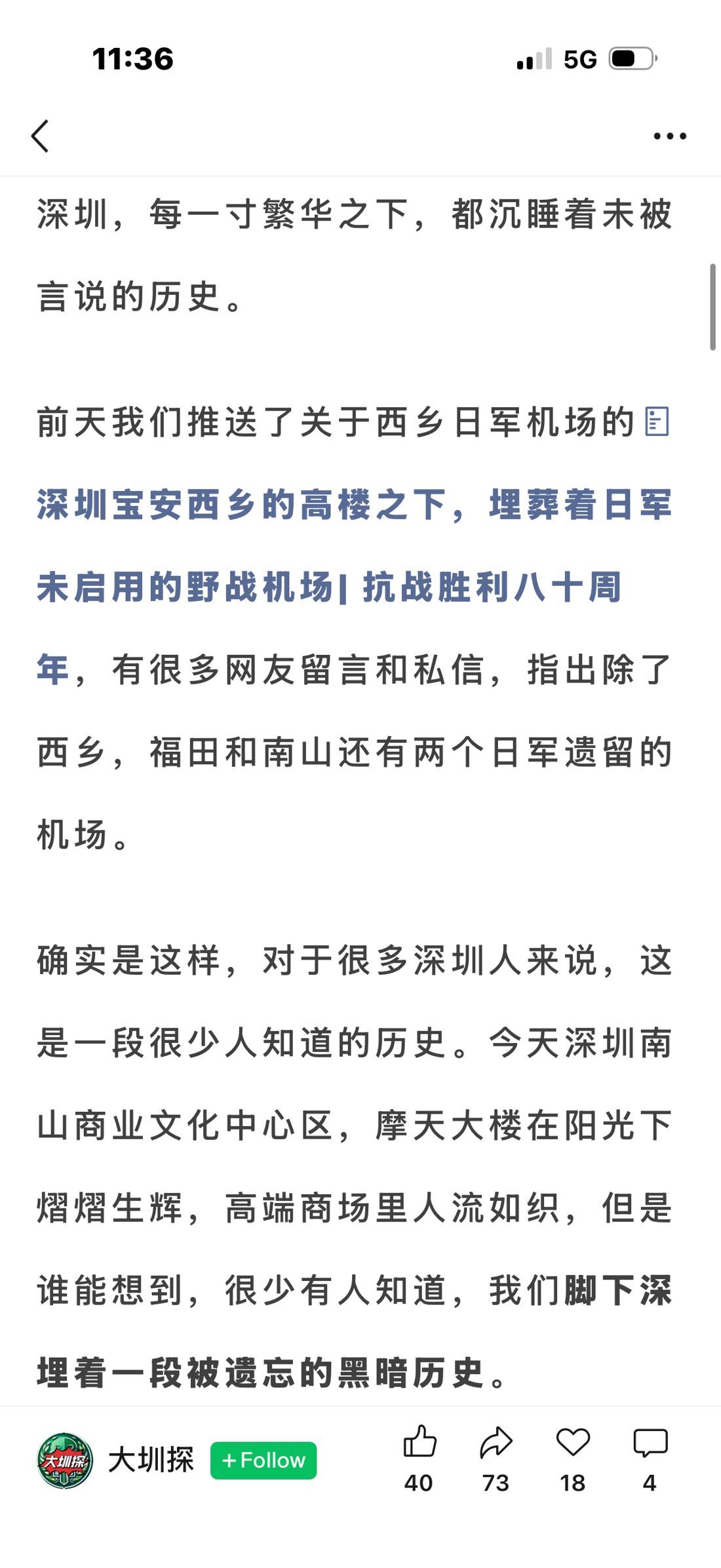
截图出处:公众号“大圳探”。Screenshots: WeChat account 大圳探.出典:公衆号「大圳探」。
为日军For Japan日本軍のため唐山:18座“飞机窝”(1943—1945)Tangshan: 18 aircraft shelters, the “plane nests” (1943–45)唐山:18基の「飛行機の巣」(1943—45)
文章称1943年春日军强行驱赶小官庄村民,抓劳工千余人修机场,跑道长2400米;18座机窝散落在今路北区曹家口、碑子院、张各庄三村。The article says that in spring 1943 the Japanese drove out the villagers of Xiaoguanzhuang and seized over 1,000 labourers to build the airfield, with a 2,400 m runway; the 18 shelters stand in three villages of today’s Lubei district.記事によれば1943年春、日本軍は小官荘の村民を追い出し、労働者千人余りを捕らえて飛行場を建設(滑走路2400m)。18基の掩体は現在の路北区の3村に残る。
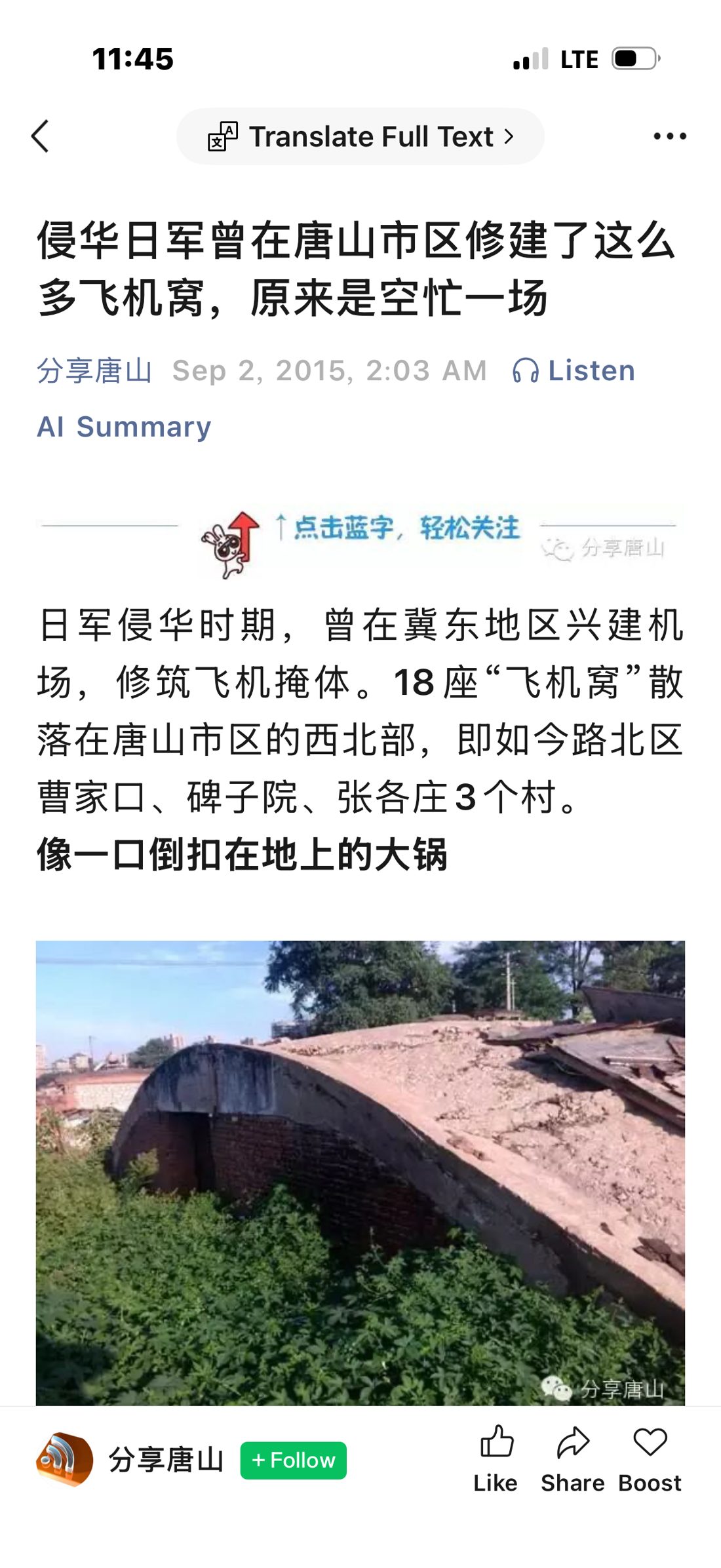
截图出处:公众号“分享唐山”,《侵华日军曾在唐山市区修建了这么多飞机窝,原来是空忙一场》,2015年9月2日。Screenshots: WeChat account 分享唐山, “The Japanese army built so many plane nests in Tangshan — all for nothing”, 2 September 2015.出典:公衆号「分享唐山」、2015年9月2日。
为日军For Japan日本軍のため东北博林线:18座“零式”机库(1942年5月建成)Northeast China, Bolin railway: 18 hangars for Zero fighters (completed May 1942)東北:零戦用格納庫18棟(1942年5月完成)
地点:博林铁路潮源林场附近的“侵华日军飞机场遗址”。钢筋混凝土机库沿山脚而建,共18个,间距约150米,另有“压地石碾”。文章称其用途是防御苏联红军、加强对东北的殖民统治。Place: the “former Japanese airfield” near Chaoyuan forest farm on the Bolin railway. 18 reinforced-concrete hangars along the foot of a hill, about 150 m apart, with the stone rollers used to flatten the runway. The article says they were built against the Soviet Red Army and to tighten colonial rule over the Northeast.場所:博林鉄道・潮源林場付近の「侵華日本軍飛行場遺址」。鉄筋コンクリートの格納庫18棟が山麓に約150m間隔で並び、整地用の石ローラーも残る。記事は対ソ防衛と東北支配の強化のためとする。
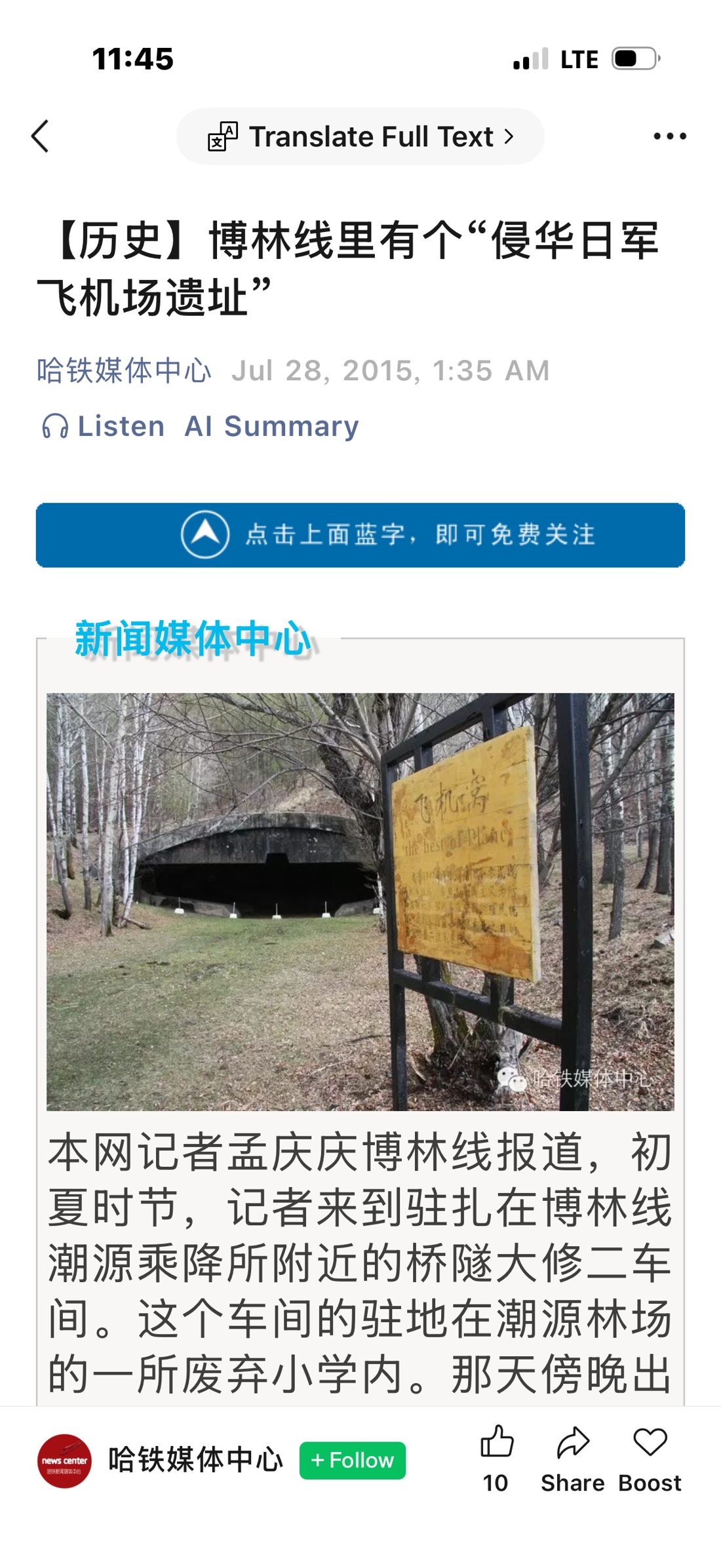
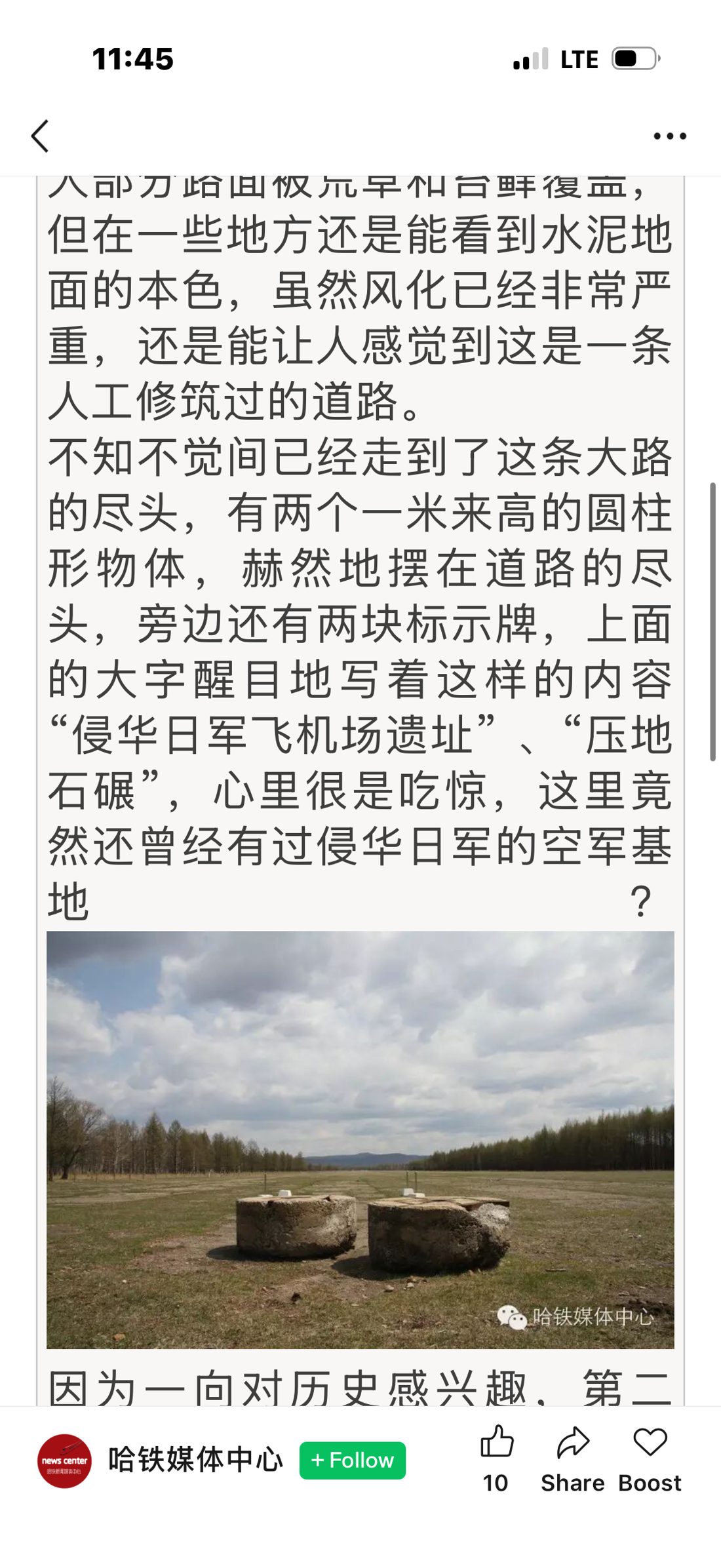
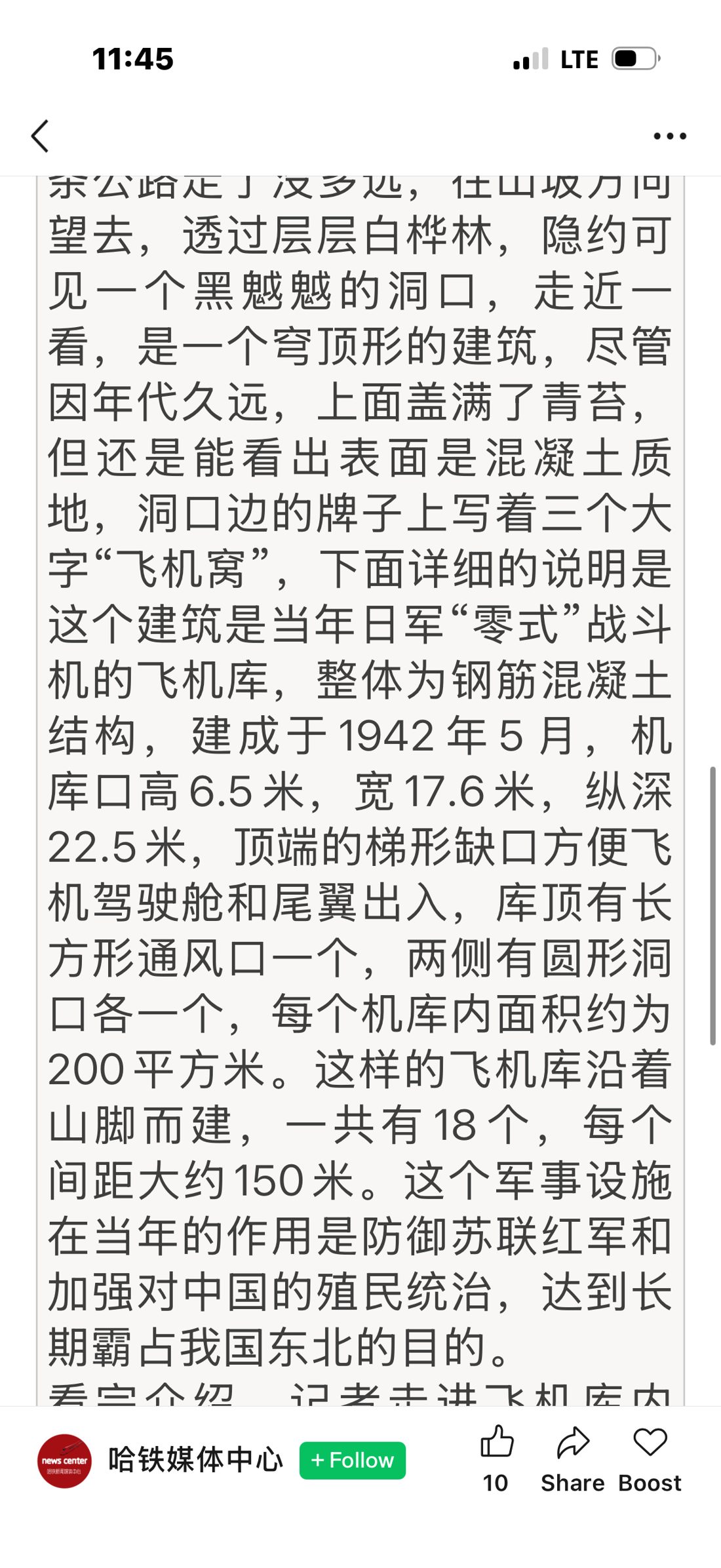
截图出处:公众号“哈铁媒体中心”,记者孟庆庆,《【历史】博林线里有个“侵华日军飞机场遗址”》,2015年7月28日。Screenshots: WeChat account 哈铁媒体中心 (Harbin Railway media centre), reporter Meng Qingqing, “A former Japanese airfield on the Bolin line”, 28 July 2015.出典:公衆号「哈鉄媒体中心」、記者 孟慶慶、2015年7月28日。
为日军For Japan日本軍のため广州:黄草埔山脚下的日军飞机库Guangzhou: a Japanese aircraft hangar at the foot of a hill near Huangcaopu広州:黄草埔の山麓に残る日本軍格納庫
视频称机库位于广州黄草埔公交站附近的山脚下,当年停放过不少飞机。修建年份和劳工情况待查。The video places the hangar at the foot of a hill near the Huangcaopu bus stop in Guangzhou and says many aircraft were kept there. Date of building and who built it are still to find.動画によれば広州・黄草埔バス停付近の山麓にあり、多くの航空機が置かれていた。建設年と労働者については要調査。
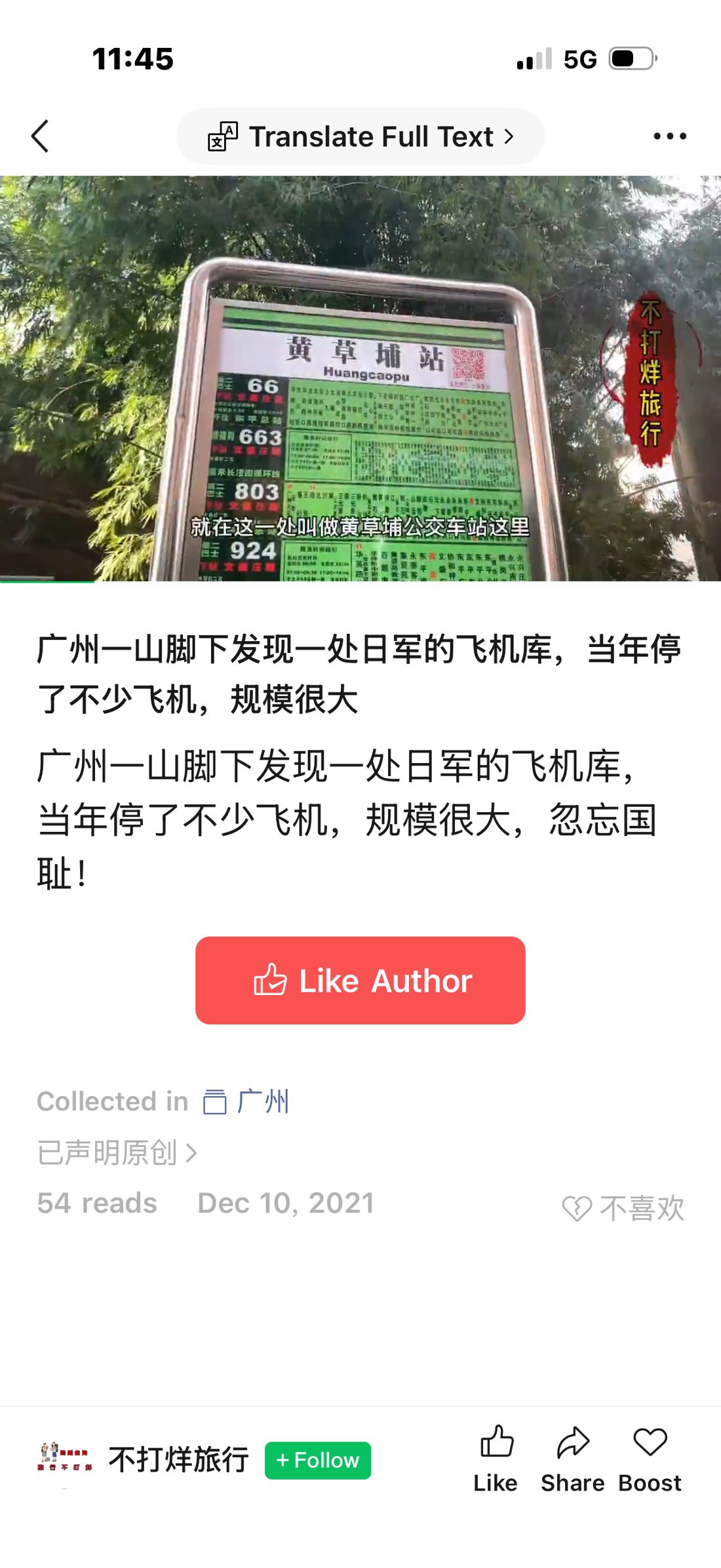

截图出处:公众号“不打烊旅行”视频,《广州一山脚下发现一处日军的飞机库,当年停了不少飞机,规模很大》,2021年12月10日。Screenshots: video by WeChat account 不打烊旅行, 10 December 2021.出典:公衆号「不打烊旅行」の動画、2021年12月10日。
1941年,抗战最艰难时候的重庆Chongqing in 1941, the hardest year of the war1941年、抗戦で最も苦しい時期の重慶
原为黑白照片,后经上色。年份与地点依转载者的说法,摄影者待查。Originally black-and-white, later colourised. Year and place are as the reposter gives them; the photographer is still to identify.もとは白黒写真で後に着色。年と場所は転載者による。撮影者は要調査。
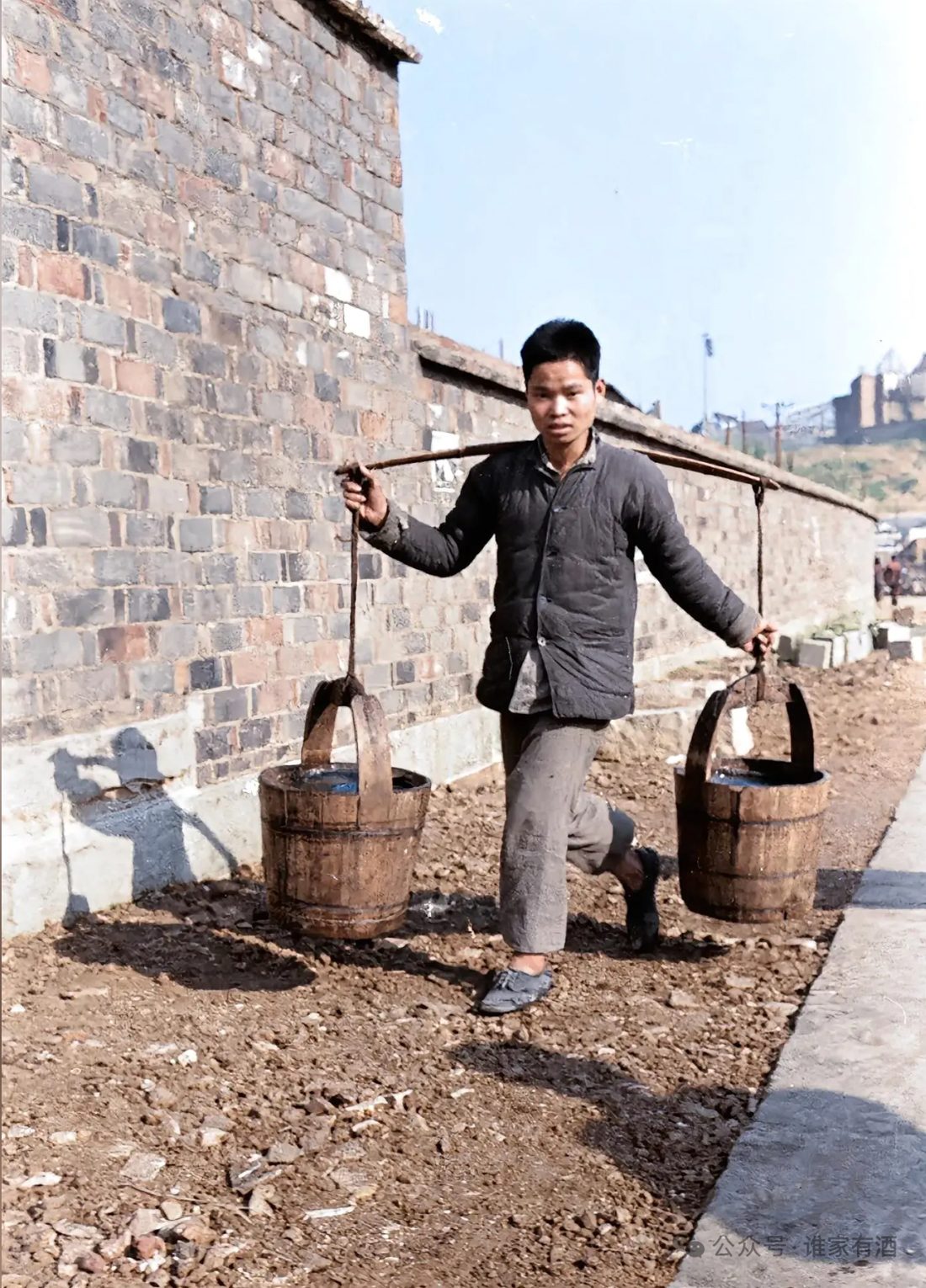
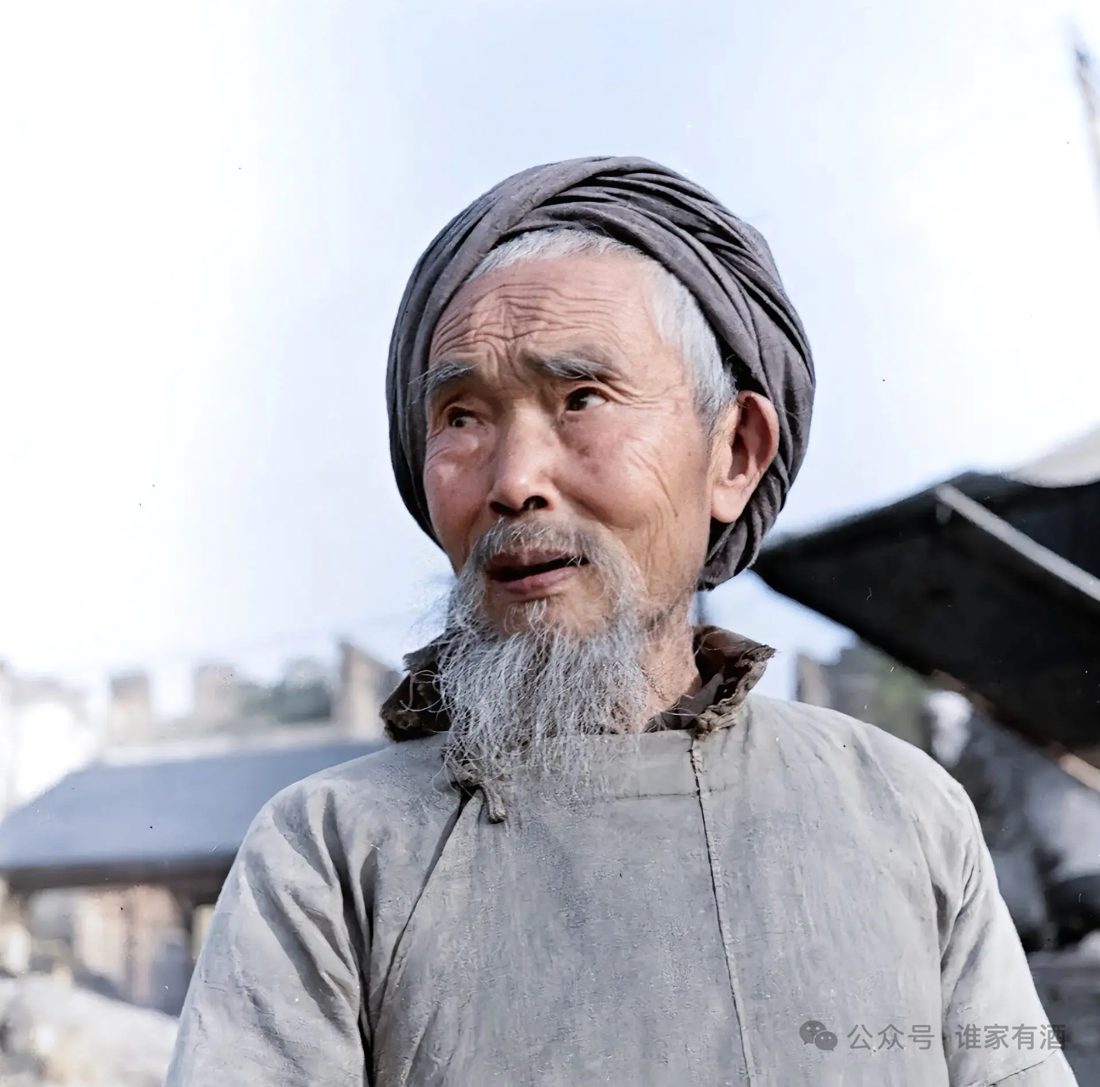

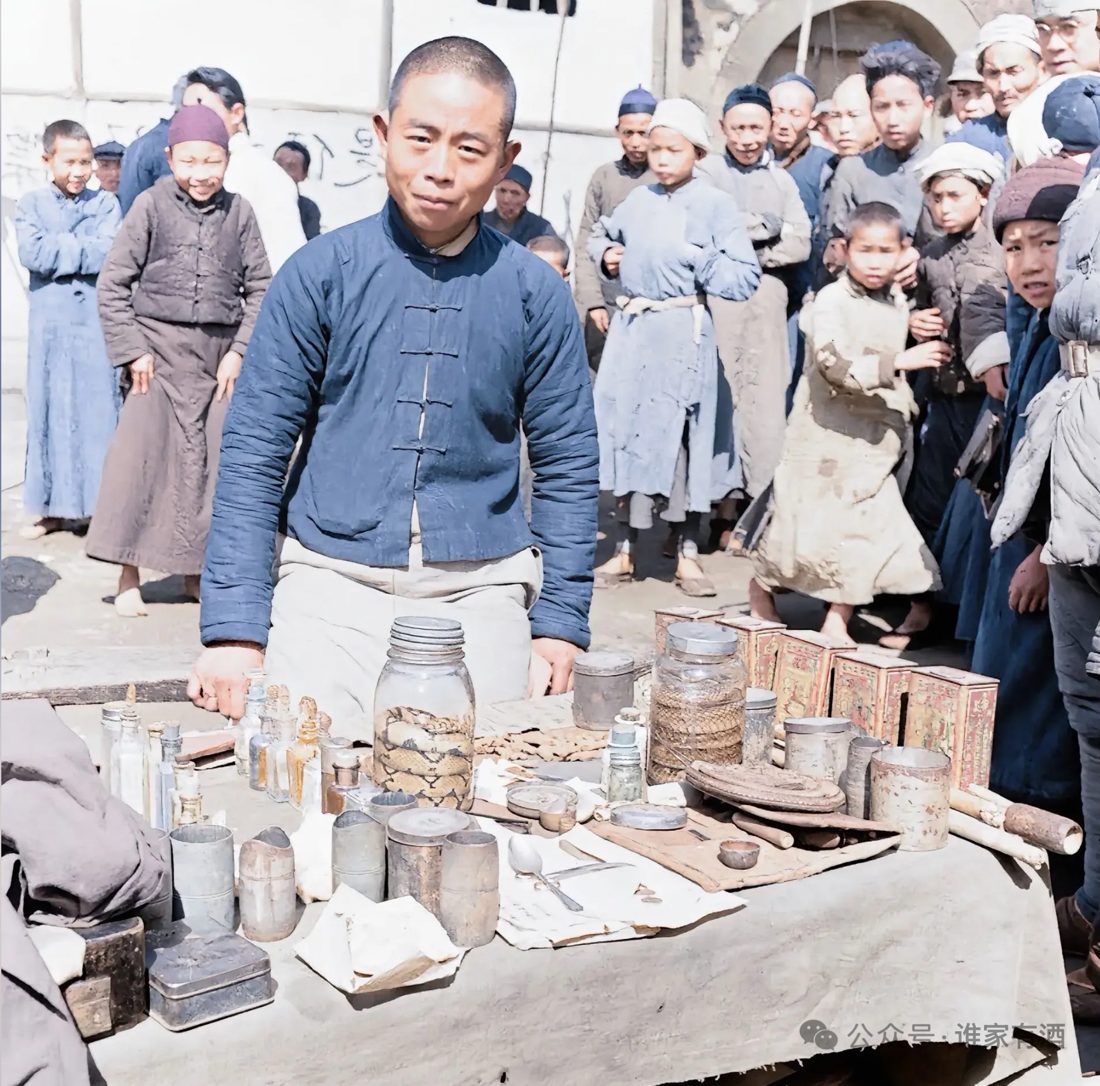
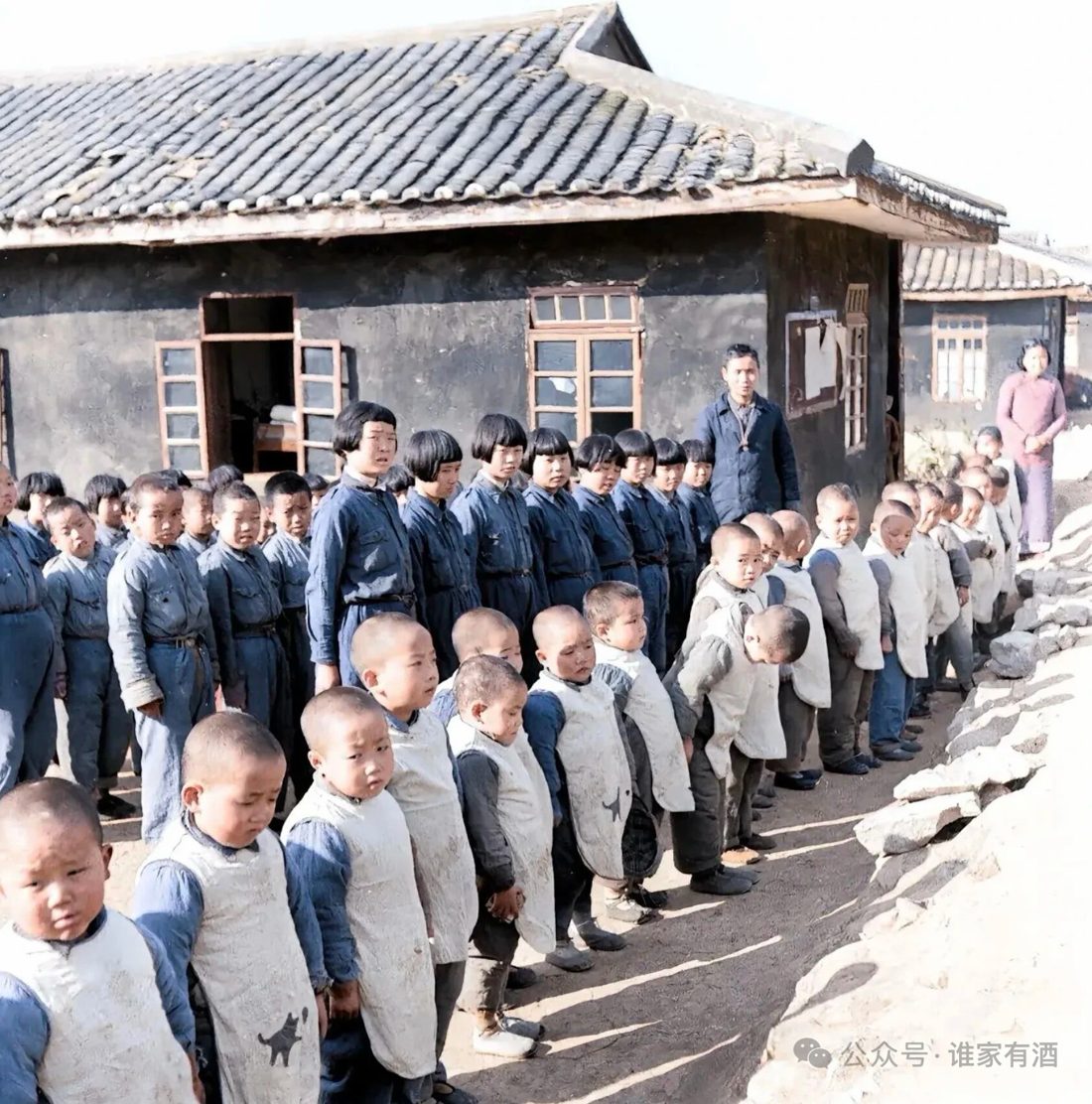
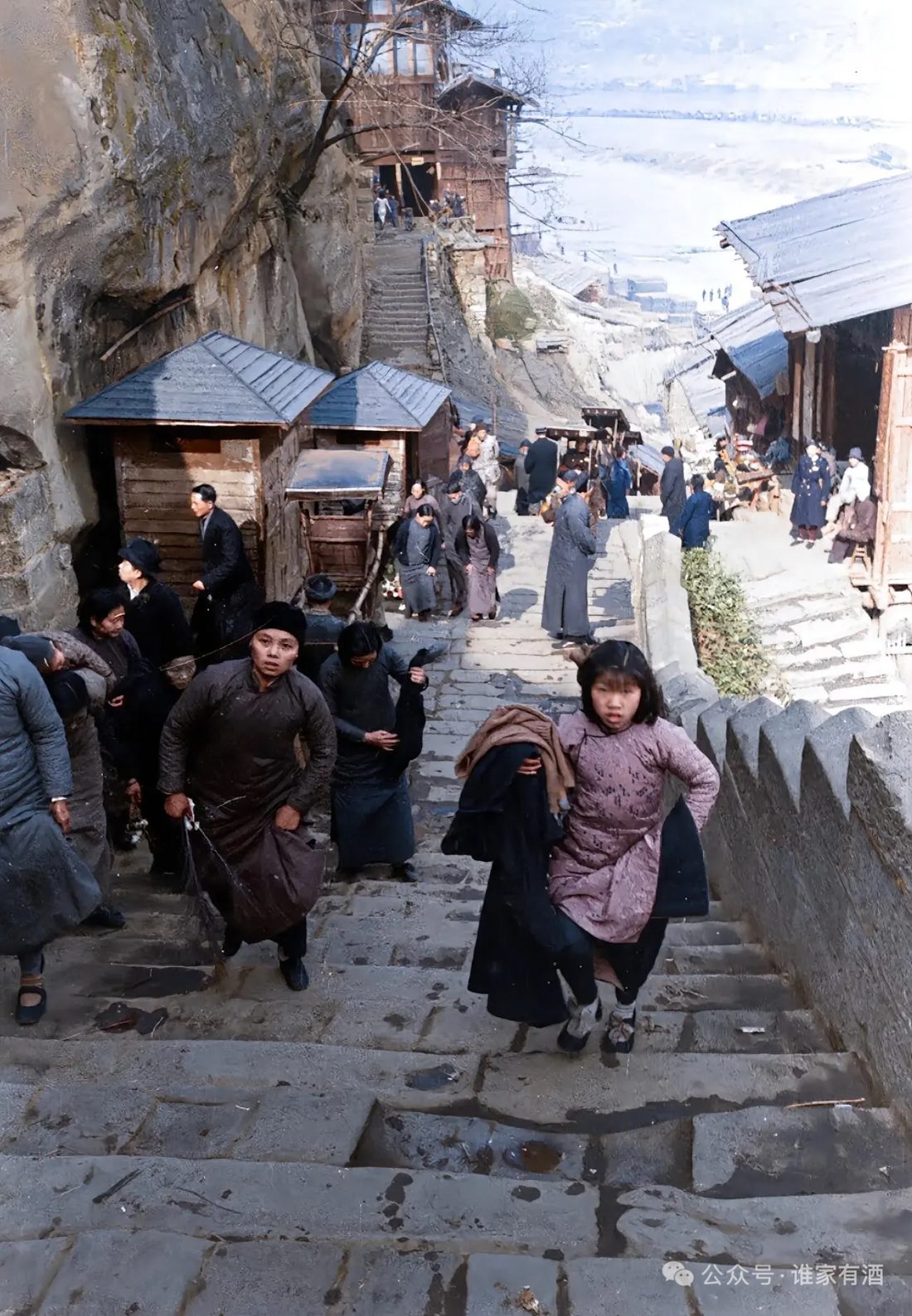
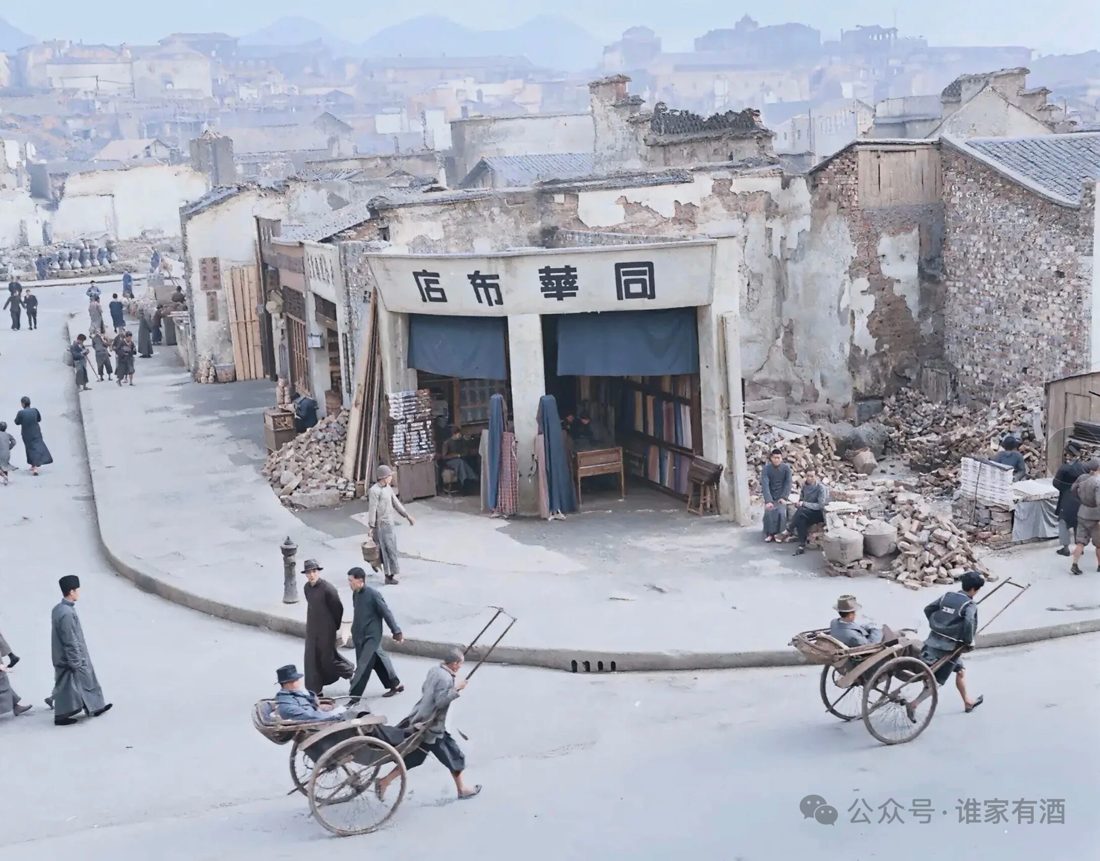
图片出处:公众号“谁家有酒”。Images: WeChat account 谁家有酒.出典:公衆号「誰家有酒」。
较场口大隧道惨案,1941年6月5日The Jiaochangkou tunnel disaster, 5 June 1941較場口大トンネル惨案、1941年6月5日
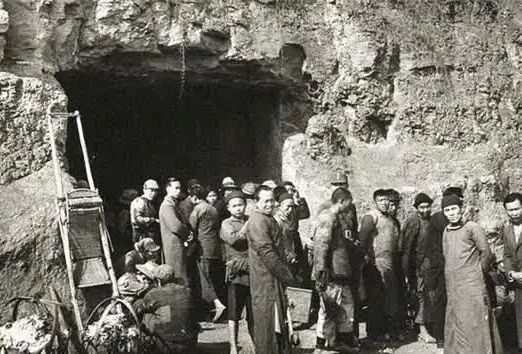
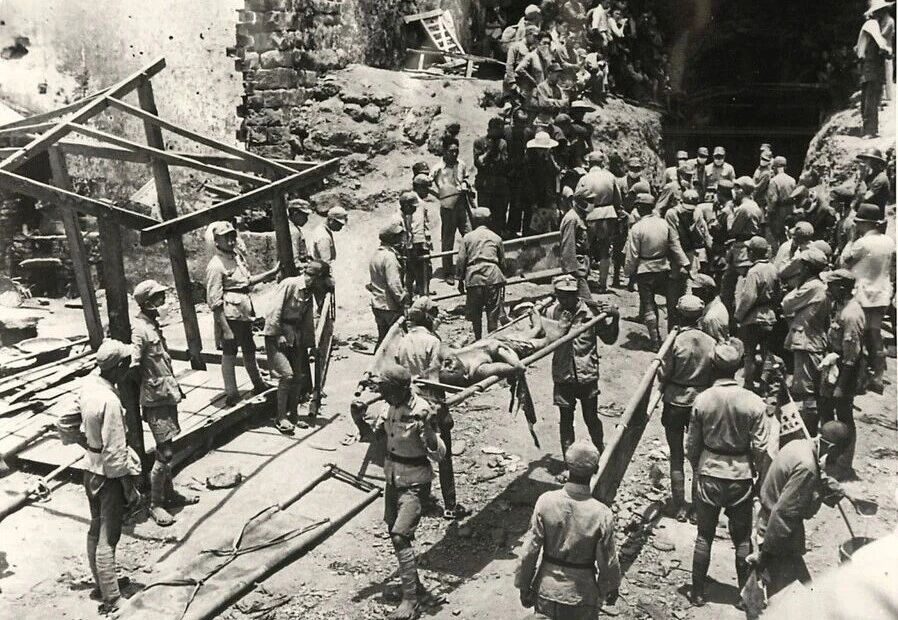
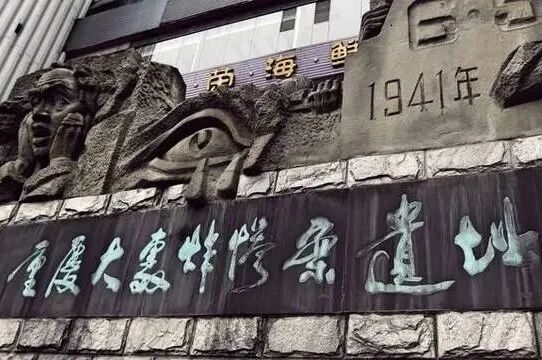
详见较场口专页 →More on the Jiaochangkou page →較場口のページへ → · 前两张拍摄者待查Photographers of the first two still to identify最初の2枚の撮影者は要調査
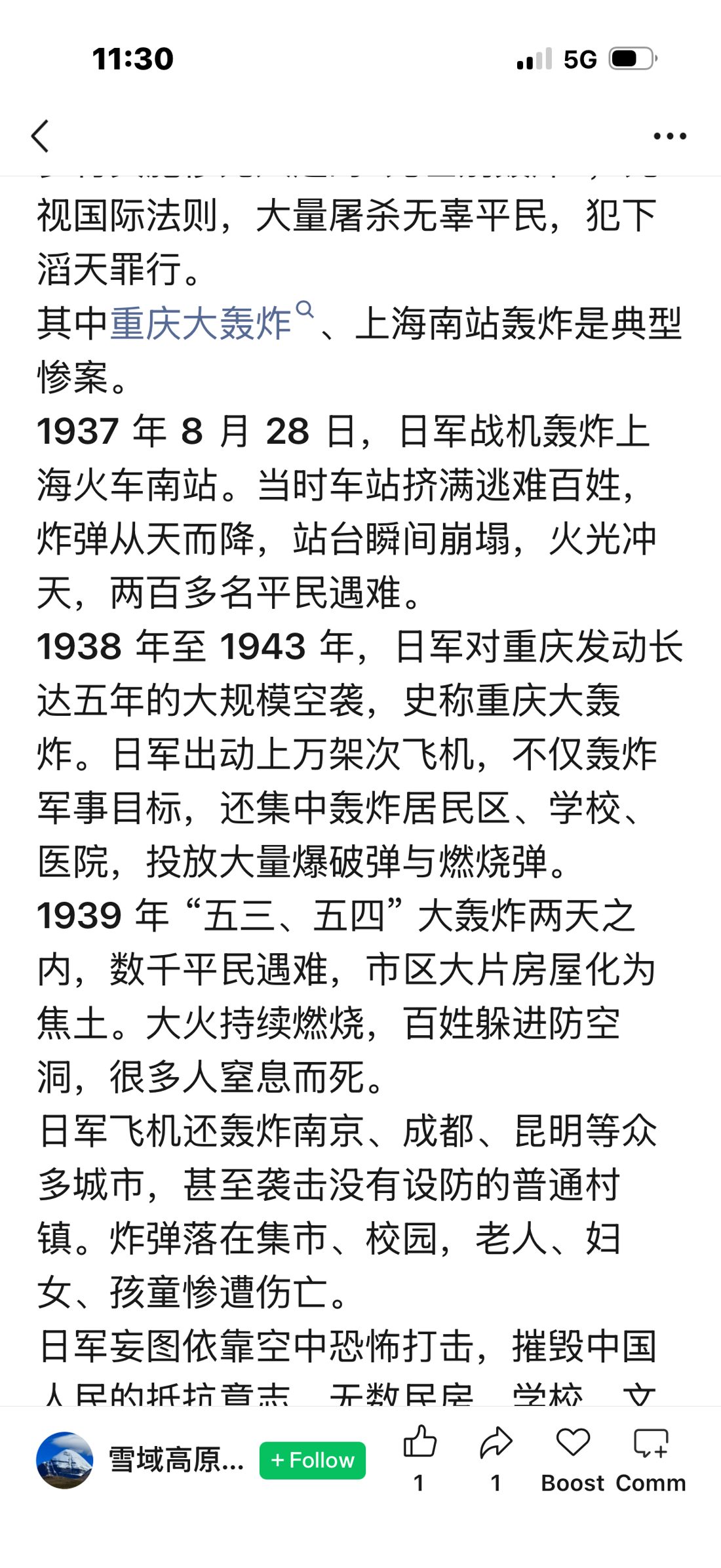
早期空中侵略:1931—1937The early air war, 1931–1937初期の航空侵攻:1931—1937
包括“九一八”后日机在热河、冀东,1937年7月28日轰炸南苑机场,淞沪会战中的航空母舰和水上飞机。照片上的说明文字是转载者加的,待核。Including Japanese aircraft over Rehe and eastern Hebei after the 1931 Mukden Incident, the bombing of Nanyuan airfield on 28 July 1937, and carriers and seaplanes in the Battle of Shanghai. The captions on the images were added by the reposter and still need checking.九一八後の熱河・冀東の日本機、1937年7月28日の南苑飛行場爆撃、第二次上海事変の空母と水上機など。画像の説明は転載者によるもので要確認。
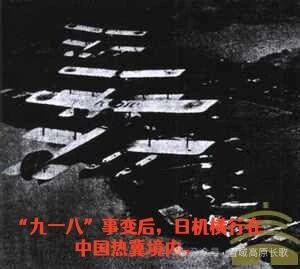
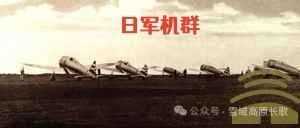
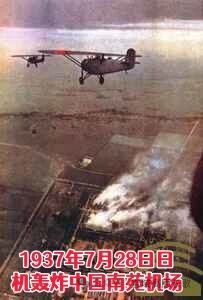
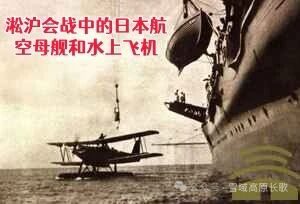
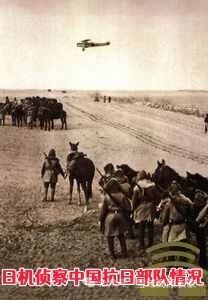
出处:公众号“雪域高原长歌”。Source: WeChat account 雪域高原长歌.出典:公衆号「雪域高原長歌」。
1945年9月5日:新六军乘美军运输机抵达南京5 September 1945: New 6th Army troops arrive in Nanjing by US transport1945年9月5日:新六軍、米軍輸送機で南京到着
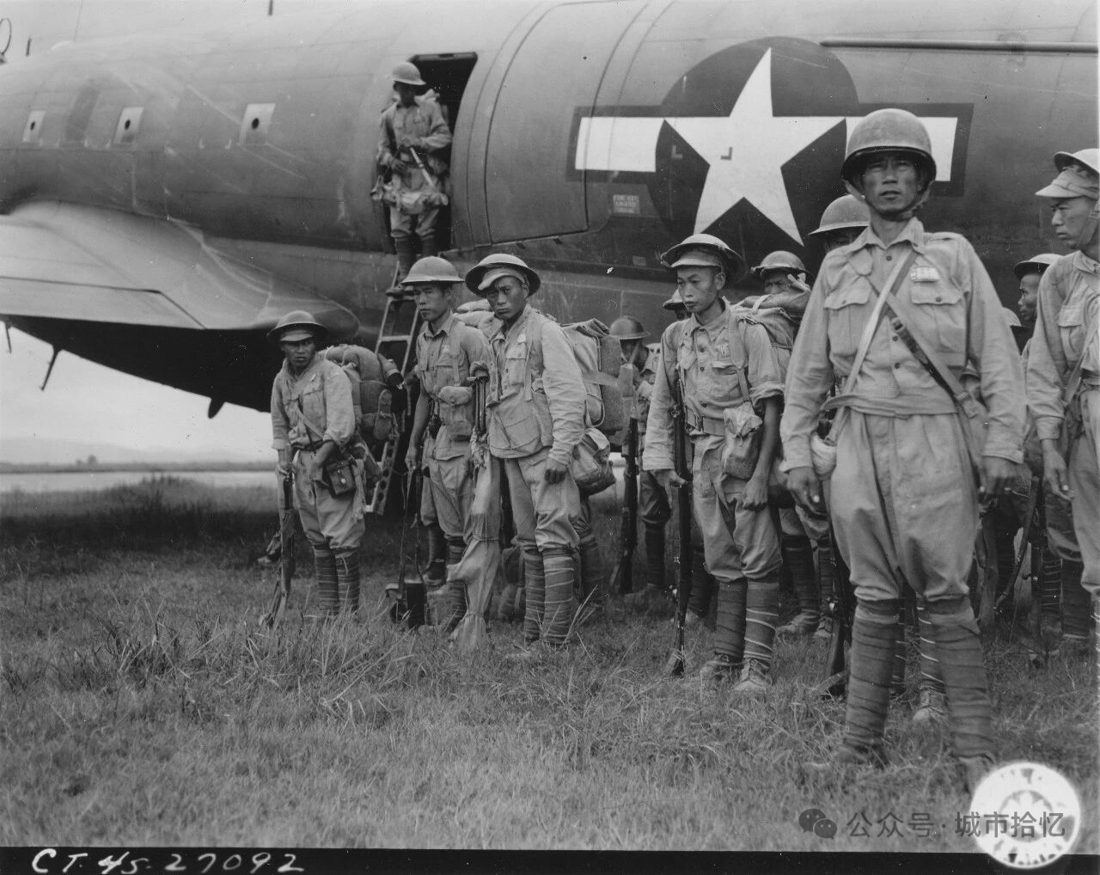
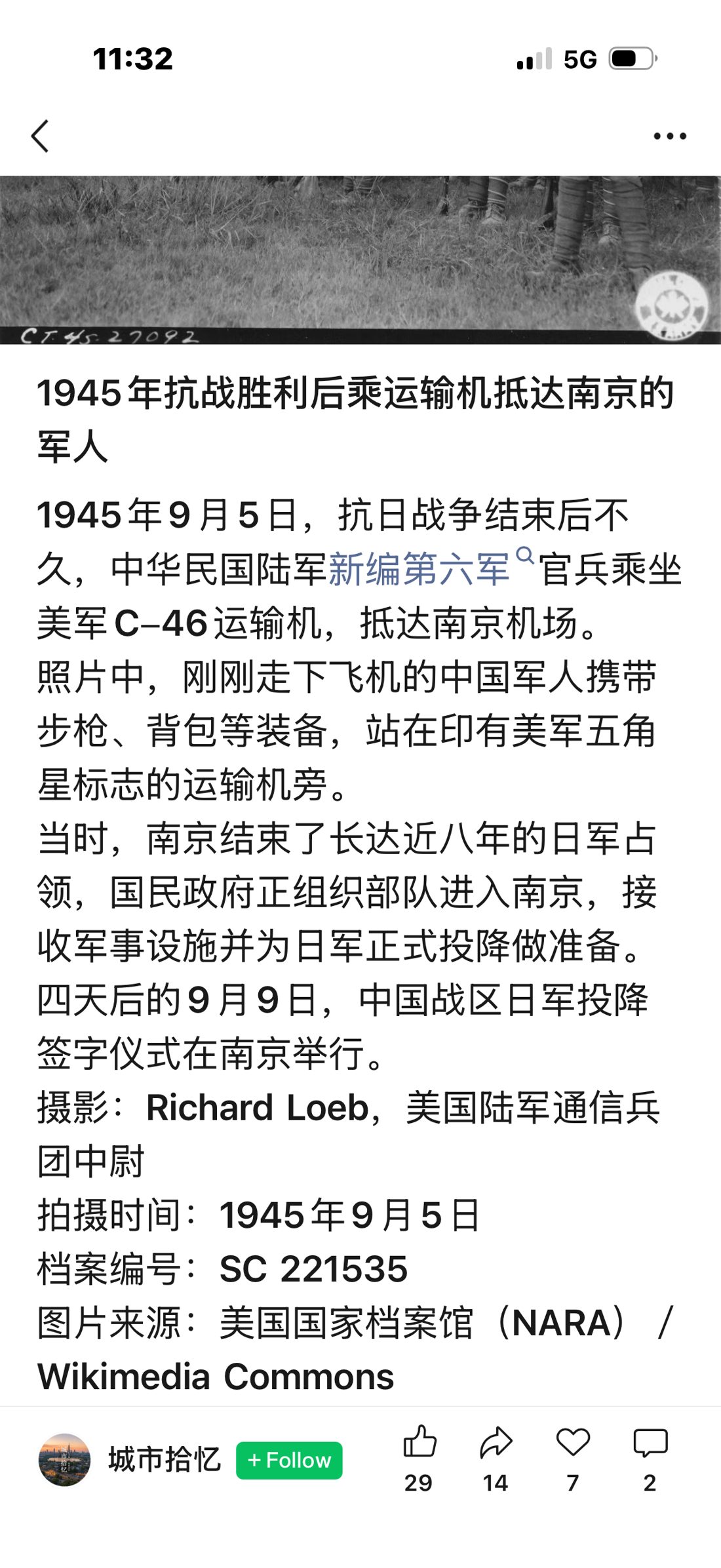
转载:公众号“城市拾忆”。原照为美国政府作品,属公有领域。Reposted by WeChat account 城市拾忆. The original is a US government work in the public domain.転載:公衆号「城市拾憶」。原写真は米政府著作物でパブリックドメイン。